

The Green-Tech Architect
Hardware is expensive, but energy is taxed. Discover how 'Carbon-Aware' computing and high-efficiency languages like Rust are becoming the new gold standard for software engineering.
aadityakasaudhan2002@gmail.com
08 Feb 2026
4 min read
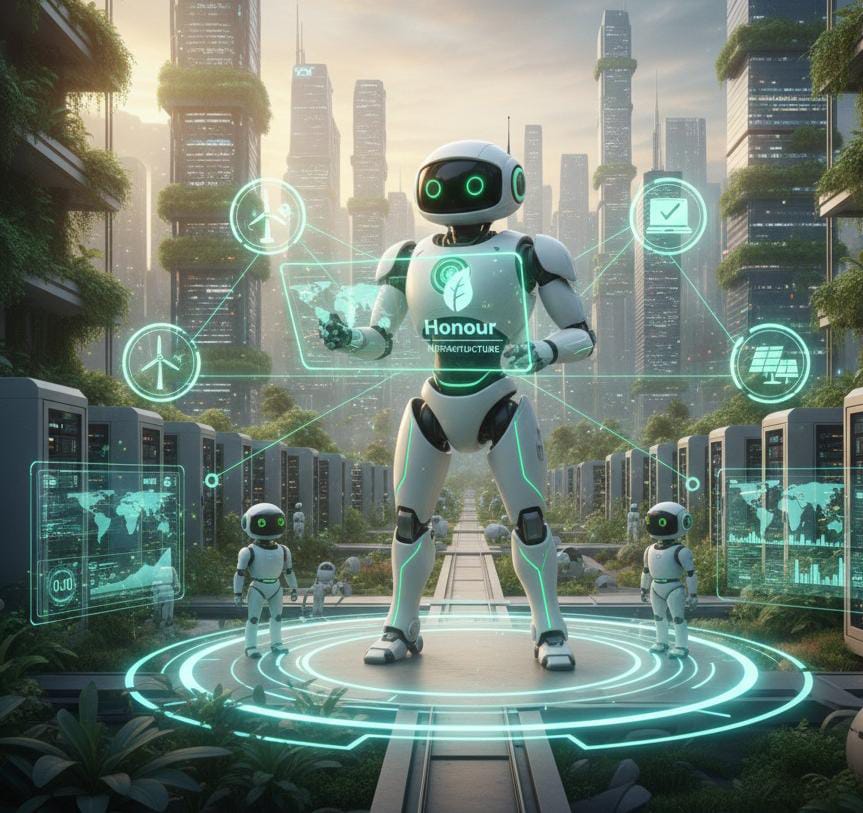
The Green-Tech Architect: Why ‘Carbon-Neutral Coding’ is a Legal Requirement
The Invisible Cost of Your Code
Welcome to February 2026. For a long time, we treated software as "weightless." We assumed that because we weren't burning fuel in a factory, our code was clean. But the reality has caught up with us. With data centers now consuming over 10% of the global electricity supply, the "Digital Carbon Tax" is no longer a rumor—it’s a line item on every corporate balance sheet in India and abroad.
In 2026, a "Great Developer" is no longer just someone who writes code that works. A Great Developer is a Green-Tech Architect—someone who writes code that is energy-efficient, resource-conscious, and carbon-aware.
What is Green Software Engineering?
Green-Tech Architecture isn't about planting trees in your office; it’s about Computational Efficiency. It is the discipline of reducing the carbon footprint of software by optimizing the energy consumed by the hardware it runs on.
In 2026, we focus on Carbon Intensity—the amount of carbon emitted per kilowatt-hour of electricity. If your code runs while the grid is powered by coal, your "Carbon Cost" is high. If it runs when the sun is out and the grid is solar-powered, your cost is low.
The 4 Pillars of Sustainable Engineering
1. The Return of "Close-to-Metal" Efficiency
In the 2010s, we got lazy. We used massive, bloated frameworks to solve tiny problems because "hardware is cheap." In 2026, hardware is expensive because energy is taxed.
Rust & C++ over Python: For high-scale background tasks, interpreted languages like Python can consume up to 75x more energy than compiled languages like Rust.
Tree-Shaking Everything: Architects now use AI-driven audits to strip away every unused library and line of dead code. If it’s not running, it shouldn't be in the container.
2. Carbon-Aware Scheduling
Why run a non-urgent database backup at 6 PM when the grid is struggling?
Demand Shaping: In 2026, smart pipelines wait for "Low-Carbon Windows." Your system automatically detects when renewable energy (Solar/Wind) is at its peak and triggers heavy workloads then.
Green Regions: Architects are now choosing cloud regions (like Google’s carbon-free data centers) based on their real-time sustainability scores rather than just latency.
3. Edge-First Logic
Data transfer is one of the biggest energy hogs. Every time data travels across the ocean through fiber-optic cables and routers, it consumes electricity.
The Edge Shift: By moving logic to the "Edge" (closer to the user’s device), we reduce the distance data travels. This doesn't just make the app faster; it makes it "Greener."
4. Verified Efficiency & Your Trust Score 🛡️
In 2026, companies have to pass "Environmental Audits" for their software. They need architects who don't just "claim" to be green but can prove it.
The Honour Advantage: This is where Honour Career Junction comes in. Our proctored assessments now include Energy-Efficiency Benchmarking. When you get verified, your Trust Score includes a "Sustainability Badge."
This badge tells employers: "This architect builds systems that save the planet AND save the company millions in Carbon Taxes."
How to Start Your "Green Pivot" Today
Measure Before You Code: Use tools like Scaphandre or the Green Metrics Tool to see how much power your dev environment is actually pulling.
Optimize the "Hot Paths": 90% of your energy is likely consumed by 10% of your code. Find those loops and database queries and optimize them for speed—because in 2026, Time = Energy.
Think "Small Data": Stop storing everything forever. Implement aggressive data-retention policies. Every gigabyte stored on a spinning disk is a constant drain on the planet.
Conclusion: Building the future shouldn't cost us our environment. In 2026, the most successful tech leaders are those who treat Watts as a currency. By mastering Green-Tech Architecture, you aren't just saving the world; you are becoming the most cost-effective asset a company can hire.
The era of "Cheap Energy" is over. The era of the Green Architect has begun. Get your efficiency skills verified on Honour Career Junction and lead the sustainable tech revolution.
Related Posts
Featured
The Simple Path to Becoming a Solo-Founder
You don't need an MBA or a big team to start a business in 2026. Here is a friendly guide on how to turn your skills into a 'One-Person' business while keeping your peace of mind.
06 Feb 2026
4 min